TV Static SVG Cricut Cut File
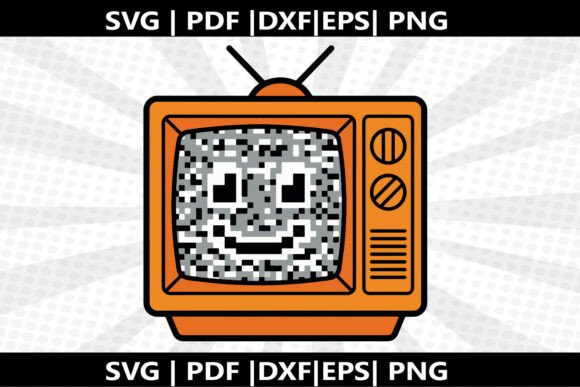
If you've ever wanted to add raw, nostalgic energy to your craft projects—without sacrificing precision or polish—the TV Static SVG Cricut Cut File delivers exactly that. It’s not just another glitchy graphic; it’s a carefully engineered vector design that captures the analog grit of vintage television interference: flickering noise, soft horizontal bands, and subtle grain—all rendered with clean, scalable paths. Visually, it walks a tightrope between retro charm and modern minimalism. There’s no harsh jaggedness, no pixelation, and no visual clutter—just controlled chaos that reads as intentional, artistic, and deeply tactile.
More Than Just a Pattern—It’s a Design Catalyst
This isn’t background filler. The TV Static SVG Cricut Cut File functions as a dynamic design element—ideal for breaking up flat surfaces, adding texture to solid-color apparel, or grounding bold typography in editorial layouts. Its personality is versatile: pair it with clean sans serifs for a tech-forward look, layer it beneath distressed script fonts for vintage band merch, or use it as a subtle watermark behind product photography. Crafters report especially strong results when applying it to black or deep navy fabrics—where the static pattern gains depth and dimension without overwhelming the base material.
Unlike raster-based static textures, this file retains full editability across platforms. You can isolate individual bands, adjust contrast using stroke weight or opacity, or even recolor sections for multi-layered vinyl projects. That flexibility makes it equally at home on a child’s personalized tote bag and a limited-run concert poster for an indie synth-pop act.
Where It Shines Across Real Projects
Think beyond “just a cut file.” This asset performs consistently across contexts where authenticity and tactile appeal matter:
- T-shirts & hoodies: Applied as a full-back print or subtle chest accent, it adds character without competing with logos or slogans.
- Home decor: Cut from iron-on vinyl onto canvas wall art or layered under acrylic frames for dimensional shadow boxes.
- Gifts & stationery: Used in foil-stamped greeting cards or laser-etched wooden coasters—its vector fidelity ensures crisp lines even at 0.25” scale.
- Digital overlays: The high-res PNG (300dpi, transparent) works cleanly in Canva, Photoshop, or Procreate for social media banners, podcast cover art, or email headers.
Small business owners find it especially useful for branding consistency—say, a record store using the static motif across stickers, window decals, and packaging tape. It becomes a quiet signature: recognizable but never repetitive.
Why Format Variety Matters—Not Just Compatibility
The included formats aren’t just checkboxes—they solve real workflow problems:
- SVG: Your go-to for Cricut Design Space and Silhouette Designer Edition. Preserves layers, grouping, and transparency—critical when nesting multiple static zones within one design.
- DXF: Essential if you’re using Silhouette Studio Basic Edition (which doesn’t support SVG import) or routing the pattern through Glowforge or CNC workflows.
- EPS: Needed for precise color separation in professional screen printing or vector editing in Illustrator—especially when adjusting anchor points for tighter weeding.
- PNG: Not just for sublimation. Its transparent background means you can drop it into mockups instantly, test color combos, or overlay it on photos without clipping masks.
- PDF: Useful for proofing print-ready files or sharing layout specs with clients or printers who don’t need editable vectors.
That range means you’re not adapting your project to the file—you’re choosing the right tool for each stage of production.
Practical Tips Before You Cut or Print
Start simple. Test the file at 4” wide on scrap vinyl first—not just to verify cut quality, but to observe how light interacts with the pattern. On glossy surfaces, static bands may read as softer; on matte fabric, they’ll pop with more contrast. Adjust stroke width slightly (0.1–0.25pt) depending on your machine’s blade tolerance—Cricut Maker users often reduce it for fine-detail work, while Cameo 4 users sometimes increase it for smoother weeding.
Weeding is genuinely stress-free here. The design avoids micro-loops and overlapping nodes—no snags, no accidental pulls. If you're cutting layered projects (e.g., static + text), group elements by material type in Design Space to avoid unnecessary mat repositioning.
For commercial use: yes, it’s fully licensed for small business applications—including physical products you sell, digital templates you license, and branded content you publish. No attribution required, but keep the original file intact—don’t convert it to outlines before redistribution unless you’re embedding it in a derivative work you fully own.
Pairing It Thoughtfully—Not Just Matching Fonts
This isn’t a font—it’s a texture—but it *interacts* with typography in meaningful ways. Use it to offset overly clinical sans serifs (think Inter, Helvetica Now) or to ground playful handwritten fonts that might otherwise feel unanchored. Avoid pairing it with other noisy textures (like halftones or heavy grain) unless you’re intentionally building maximalist collage work.
In editorial design, try placing the static pattern behind pull quotes—its movement draws the eye without competing with body copy. In packaging, apply it to the spine or bottom edge of a box so it emerges only on second glance—a quiet nod to analog roots in a digital age.
And remember: restraint often amplifies impact. One well-placed band across a mug handle or along the hem of a scarf says more than covering every surface. Let the static breathe—and let your audience discover it.