Thick Line Closed Eyes Vector Design
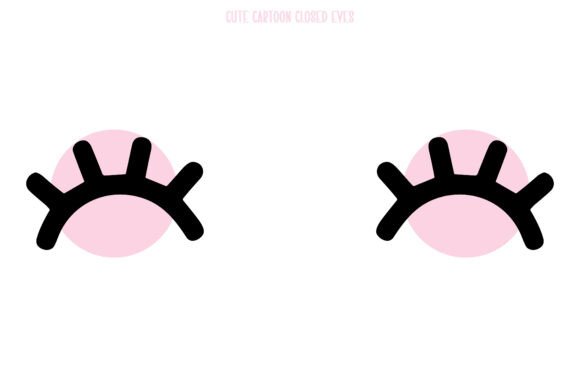
If you’ve ever scrolled through design marketplaces searching for a graphic that balances simplicity with expressive weight—something that feels both grounded and quietly evocative—you’ve likely paused on Thick Line Closed Eyes Vector Design. It’s not just another icon or illustration. It’s a distilled visual gesture: bold, confident lines tracing the gentle curve of closed eyelids, rendered with intentional restraint. There’s no shading, no gradients—just clean, deliberate strokes that carry emotional resonance. The thickness of the line gives it presence; the closed eyes suggest calm, introspection, pause, or even quiet confidence—not passivity, but intention.
This isn’t decorative filler. It’s a design asset built for purpose. Every curve is vector-drawn and mathematically precise, so whether you scale it to fit a business card or blow it up across a 10-foot exhibition banner, the edges stay razor-sharp. That’s non-negotiable for professionals who rely on consistency—whether you’re designing a wellness brand’s packaging, crafting an editorial spread for a mindfulness magazine, or building social media assets for a yoga studio’s seasonal campaign.
Where This Vector Design Earns Its Keep
Thick Line Closed Eyes Vector Design thrives where subtlety meets impact. In brand identity, it works beautifully as a secondary mark—paired with a clean sans serif logo, it adds warmth without competing. Think of a mental health app using it in its onboarding animation, or a ceramicist embedding it into her stationery suite to reinforce themes of presence and craft. It’s equally at home in editorial design: imagine it anchoring a feature on restorative sleep in a print magazine, placed beside minimalist typography and generous white space.
For digital use, its high-resolution JPG (300 DPI) and scalable EPS ensure crisp rendering on retina displays and mobile interfaces. Use it as a recurring motif in a website’s “pause” or “breathe” micro-interaction—or layer it subtly into background patterns for landing pages focused on self-care, therapy, or creative renewal. Unlike overly literal illustrations, this design leaves room for interpretation—making it adaptable across cultures and contexts without needing translation or rework.
Why Editability Matters More Than You Think
The included 100 editable vector shapes aren’t just a bonus—they’re your flexibility engine. Because each element is individually selectable in Illustrator, you can adjust stroke weight, rotate individual eyelid arcs, or recolor single components without affecting others. Need to match a client’s exact brand palette? Swap colors in seconds—not hours. Want to integrate it into a custom pattern? Copy, duplicate, and stagger the shapes with precision. That level of control transforms what could be a static graphic into a living part of your design system.
The fact that it ships in RGB color mode means it’s optimized for screen-first workflows—no surprise color shifts when moving from mockup to live site. And because the ZIP package includes both EPS (for full editability) and JPG (for quick drag-and-drop use), you’re covered whether you’re deep in a vector session or assembling a Canva presentation under deadline.
Real-World Pairing & Practical Fit
Pairing this vector with type requires listening—not matching. Its strength lies in contrast: let it breathe next to a light, airy sans serif like Inter or Poppins. Avoid heavy serifs or ornate scripts—they’ll clash with its quiet authority. Instead, lean into typographic balance: use it alongside medium-weight text faces for body copy, then introduce subtle hierarchy with letter-spacing or line-height adjustments—not boldness.
Before committing to a project, ask yourself three things: Does the tone align? (It won’t suit aggressive fintech campaigns—but fits perfectly for a meditation retreat’s brochure.) Is scalability required? (If it’ll appear on merch, signage, or digital ads, the vector nature is essential.) Do you need to adapt it beyond basic resizing? (If yes, the editable EPS is indispensable—not optional.)
We’ve seen designers use this asset in ways the original creator might not have imagined: stitched onto linen tote bags, laser-etched onto wooden coasters, animated frame-by-frame for Instagram Reels, or converted to SVG for interactive web elements. That versatility isn’t accidental—it’s baked into the construction.
Licensing Clarity, Not Fine Print Confusion
This is a commercial font—but more accurately, a commercial vector design. That means you’re cleared to use it in client work, sell products featuring it (like printed journals or apparel), and incorporate it into SaaS interfaces—no hidden restrictions. There’s no need to track usage metrics or submit proof of purchase to third parties. What you get is straightforward: one-time access, full editing rights, and permission to deploy across platforms and mediums, as long as it’s part of a larger creative output (not resold as a standalone vector pack).
That clarity matters—especially for freelancers juggling multiple clients or small studios building reusable brand kits. No surprises, no renegotiation. Just reliable, professional-grade assets that behave as expected.
A Design Choice With Quiet Confidence
In a landscape saturated with overdesigned icons and trend-chasing illustrations, Thick Line Closed Eyes Vector Design stands out by doing less—and meaning more. It doesn’t shout. It invites. It supports rather than dominates. Whether you’re a marketer building a campaign around mental resilience, a publisher curating a special issue on stillness, or a craftsperson defining a visual language rooted in authenticity, this vector gives you a foundational element that carries weight without heaviness.
It’s not about chasing novelty. It’s about choosing tools that hold up—across revisions, across mediums, across time. That’s the kind of design decision that earns trust, builds recognition, and quietly strengthens how your audience experiences your work. Not flashy. Not fleeting. Just right.