Caterpillar SVG Cricut Cut File: A Practical Guide for Crafters
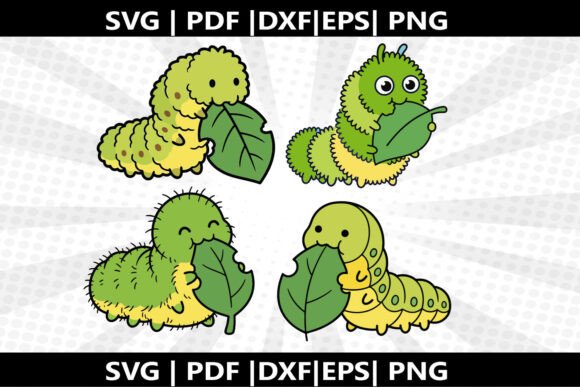
A Caterpillar SVG Cricut Cut File is a digital vector design optimized for precision cutting, printing, and crafting. Unlike raster images or low-resolution graphics, this file type preserves crisp edges and smooth curves at any size — making it ideal for projects ranging from small iron-on transfers to large wall decals. It’s not just a picture of a caterpillar; it’s a production-ready asset built with clean nodes, minimal anchor points, and consistent stroke paths — all essential for reliable performance across cutting machines.
How It Differs From Other Caterpillar Designs
Not all caterpillar-themed cut files deliver the same results. Some are traced from photographs or converted from JPEGs, resulting in jagged outlines, unnecessary nodes, or inconsistent line weights that cause cutting errors or difficult weeding. A well-made Caterpillar SVG Cricut Cut File, by contrast, is purpose-built: layers are separated logically (e.g., body segments, antennae, eyes), colors are assigned thoughtfully for multi-layer projects, and internal details like texture or shading use vector gradients or embedded patterns — not pixel-based fills.
This distinction matters most when working with layered materials like heat transfer vinyl (HTV) or layered cardstock. A poorly constructed file may require manual node editing in Design Space or Silhouette Studio before cutting — adding time and risk of error. A high-quality Caterpillar SVG Cricut Cut File typically needs little to no adjustment before sending to your machine.
Format Flexibility: Why Multiple File Types Matter
The value of a Caterpillar SVG Cricut Cut File isn’t limited to SVG alone. Reputable versions include DXF, EPS, PNG (300dpi, transparent background), and PDF — each serving distinct workflows:
- SVG: Best for Cricut Design Space, Silhouette Designer Edition, and vector editors like Inkscape or Illustrator. Supports layers, grouping, and color-coded cut settings.
- DXF: Required for Silhouette Studio Basic Edition and compatible with many laser cutters (e.g., Glowforge) and CNC tools. Lacks layer support but retains precise geometry.
- EPS: Industry-standard for professional print shops or designers needing editable vector output in Adobe Illustrator or CorelDRAW.
- PNG: Essential for sublimation, digital scrapbooking, or overlaying on photos — especially useful if you’re designing custom greeting cards or printable party decorations.
- PDF: Ideal for proofing, sharing with collaborators, or printing physical templates for hand-cutting or stenciling.
Having all formats in one zip means you’re not locked into a single platform or workflow. If you start with Cricut but later switch to a Brother ScanNCut or upgrade to a Glowforge, your Caterpillar SVG Cricut Cut File remains usable — no need to repurchase or reconvert.
Real-World Use Cases and Fit
A Caterpillar SVG Cricut Cut File works best when the project benefits from scalability, clean lines, and reproducibility. For example:
- Band moms often create spirit wear for marching band events. A scalable caterpillar design can be resized to fit tiny toddler t-shirts or oversized hoodies — maintaining legibility and proportion without distortion.
- Baseball fans sometimes use insect motifs ironically (“crawling up the standings”) or as team mascots for youth leagues. Here, the ability to recolor segments individually helps match team colors precisely.
- Animal lovers may prefer nature-themed decor — think garden signs, nursery art, or classroom bulletin boards. The caterpillar’s organic shape lends itself to botanical arrangements or educational displays about life cycles.
That said, it’s not universally optimal. If you’re doing intricate embroidery digitizing, a vector file alone won’t suffice — you’ll need an embroidery-specific format (.PES, .DST). Similarly, for photorealistic prints (e.g., a detailed macro photo of a caterpillar on canvas), a high-res PNG or TIFF would outperform even the best SVG.
Performance Across Machines: What to Expect
Most users report reliable performance with the Caterpillar SVG Cricut Cut File on Cricut Explore Air 2, Maker, and Joy models — especially when using standard or light-grip mats and fine-point blades. On Silhouette Cameo 4 or Portrait 3, the DXF version tends to load faster than SVG in Basic Edition, avoiding compatibility warnings.
For Glowforge users, the SVG or DXF imports cleanly, though some minor path simplification may help reduce processing time on complex versions (e.g., those with segmented bodies or textured shading). With Brother ScanNCut, the SVG usually imports without issue, but always verify registration marks align correctly — older firmware versions occasionally misinterpret embedded scaling data.
One consistent advantage: because the file uses vector math rather than pixels, resizing doesn’t introduce blurring or aliasing. You can scale from 1 inch to 24 inches and still get sharp cuts — unlike PNG-based designs, which degrade beyond their native resolution.
Tradeoffs and Limitations to Consider
No digital file eliminates all variables. Even the best Caterpillar SVG Cricut Cut File depends on material choice, blade condition, and machine calibration. For instance:
- Thin HTV may lift at tight curves unless you adjust pressure or use kiss-cut settings.
- Very small details (like individual legs under 2mm) may not cut cleanly on thicker materials like balsa wood or chipboard — test first.
- If the design includes gradients or shadows, those elements are often flattened into solid-color layers in SVG/DXF. True gradient support requires software like Cricut Design Space with Print Then Cut capability.
Also, while the file itself is royalty-free for personal and small-batch commercial use (check license terms), it doesn’t include font files or extended character sets. If your project pairs the caterpillar with custom text, you’ll need to source compatible fonts separately.
Making the Right Choice
A Caterpillar SVG Cricut Cut File is strongest when you prioritize versatility, precision, and long-term usability across devices and materials. It suits crafters who regularly switch between apparel, home decor, and paper crafts — and who value time saved on troubleshooting over paying slightly more upfront.
It’s less ideal if you only cut simple shapes once a month, rely heavily on pre-loaded Cricut Access images, or work exclusively with non-vector workflows (e.g., screen printing separations or embroidery-only projects). In those cases, a lower-cost PNG bundle or subscription-based design library might offer better value — especially if you need frequent variety over technical fidelity.
Before purchasing, review previews carefully: zoom in on edge quality, check how layers are organized, and confirm whether the file includes mirrored versions for iron-ons. If possible, download a free sample from the same creator to test import behavior in your preferred software.
In short, the Caterpillar SVG Cricut Cut File isn’t just another clipart download — it’s a tool engineered for consistency. When matched with appropriate materials and realistic expectations, it supports repeatable, professional-grade outcomes across a wide range of creative applications.